
Implementing blockchain for provenance is not a technology project; it’s a data integrity and physical security initiative.
- The immutability of a blockchain is worthless if the initial data is incorrect or the physical asset’s tag can be cloned—the classic “Garbage In, Garbage Out” problem.
- A UK-hosted consortium blockchain offers the best balance of security, control, and GDPR compliance for British brands over generic public or private chains.
Recommendation: Shift focus from choosing a blockchain platform to architecting a robust process for tagging physical assets and automating data capture at the source.
For any director of a luxury British brand, the ‘Made in Britain’ label is both a prized asset and a constant target. In a global market flooded with sophisticated counterfeits, how do you prove—unequivocally—that your Harris Tweed was woven in the Outer Hebrides or your single malt was distilled and aged in Scotland? For years, the answer has been serial numbers and digital certificates of authenticity. But these are no longer enough. They are easily forged, detached from the physical item, and fail to convince discerning buyers, particularly in key Asian markets.
The conversation has now shifted to blockchain, often presented as a silver bullet for supply chain transparency. However, this view is dangerously simplistic. The core promise of blockchain—an immutable, tamper-proof ledger—is only as strong as its weakest link. The real vulnerability isn’t in the distributed digital ledger itself, but in the crucial bridge between the physical world and the digital record. If you can’t guarantee the integrity of the data at its point of origin, or if the physical tag on your product can be cloned, the blockchain only serves to immutably record fraudulent information.
This guide moves beyond the hype. It is not a technical primer on cryptography, but a strategic briefing for business leaders. We will dissect the critical failure points in blockchain provenance systems and provide an architectural framework for building a solution that genuinely secures your brand’s heritage. We will explore how to select the right physical tagging technology, structure a governance model fit for UK enterprise, mitigate the critical risk of input error, and successfully onboard your entire supply chain. The goal is to transform your brand’s provenance from a marketing claim into a verifiable, immutable fact.
text
This article provides a strategic framework for leveraging blockchain effectively. We will break down the essential components, from addressing the inherent weaknesses of current systems to implementing a secure and scalable solution for your brand.
Summary: A Director’s Playbook for Blockchain-Verified Provenance
- Why Digital Certificates Are No Longer Enough to Convince Asian Buyers?
- How to Tag Physical Assets for Immutable Ledger Tracking?
- Public vs Private Blockchains: Which Offers Better Security for Enterprise?
- The Input Error That Renders Blockchain Verification Worthless
- How to Onboard Suppliers to Your Ledger Without Disrupting Their Ops?
- How to Use ‘Made in Britain’ Branding to Command a 15% Price Premium?
- The Serial Number Cloning Trick That Bypasses Basic Checks
- How to Secure Your Supply Chain Against Counterfeits Using Immutable Tracking?
Why Digital Certificates Are No Longer Enough to Convince Asian Buyers?
The traditional method of verifying authenticity—a paper certificate or a simple digital record accessed via a generic QR code—is fundamentally broken. These certificates are separate from the product itself, making them trivial to forge, copy, and distribute alongside counterfeit goods. For a sophisticated buyer in a market like China or Japan, a PDF certificate holds little weight because it doesn’t prove an unbreakable link to the physical item they are holding. The scale of this problem is staggering; the OECD’s 2024 report confirms that £7.1 billion in counterfeit goods were imported to the UK in 2021 alone, eroding brand value and consumer trust.
This disconnect is the core vulnerability that counterfeiters exploit. They can produce a near-perfect physical replica and pair it with a perfectly forged digital certificate. The result is that the legitimate brand and the fraudulent one appear identical to the end consumer, completely nullifying the value of the ‘Made in Britain’ promise. This is particularly damaging in markets where consumers pay a significant premium for British heritage and are increasingly tech-savvy. They expect digital proof that is as well-crafted and secure as the luxury product itself. A simple, unsecured digital file is an invitation to fraud, not a barrier against it.
Therefore, any modern provenance strategy must begin by closing this gap. The digital proof of authenticity must be intrinsically and securely bonded to the physical asset. It cannot be a separate, easily replicable file. This is the foundational principle upon which a credible blockchain solution is built. Without it, you are simply digitising an already flawed system.
How to Tag Physical Assets for Immutable Ledger Tracking?
The most critical component of any blockchain provenance system is the physical-digital twin: the unique, un-clonable tag that anchors a physical product to its digital record on the ledger. If this tag can be removed, copied, or transferred to a counterfeit item, the entire system collapses. The choice of tagging technology is therefore a primary strategic decision, not a secondary technical one. Your selection must be based on the value of the asset, the materials it is made from, and the specific threats you face.
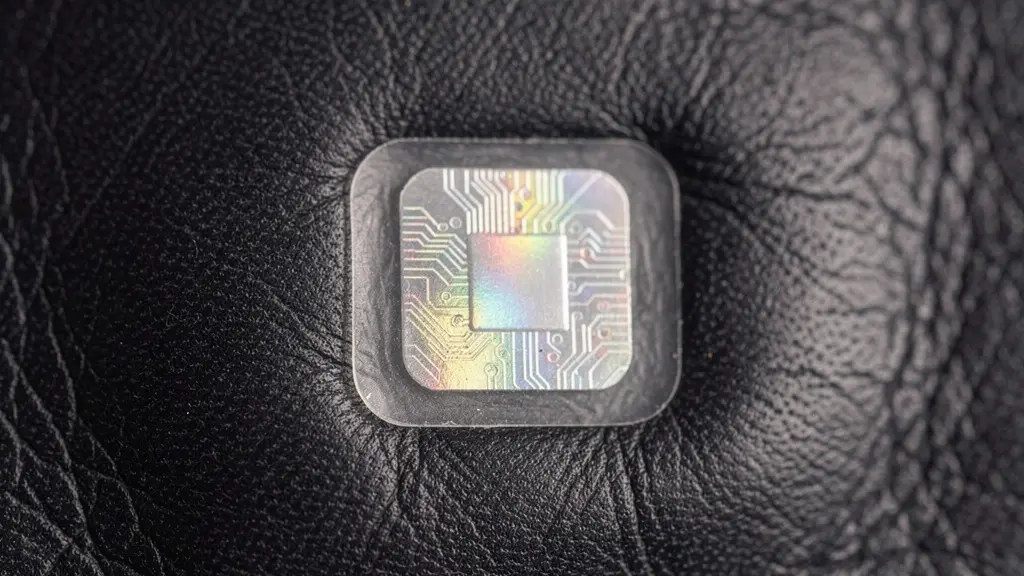
As the image above illustrates, modern authentication is about subtle, secure integration. The technology options vary significantly:
- NFC (Near Field Communication) Tags: Ideal for high-value items (£5,000+). These can be embedded within the product (e.g., sewn into a garment’s label, integrated into a bottle cap) and can store more data than QR codes. Advanced NFC tags have built-in cryptographic features that make them extremely difficult to clone.
- Secure QR Codes: A viable option for mid-range goods (£30-£500). Unlike standard QR codes, these are generated with unique, encrypted patterns that are verified against a secure server, making simple photocopying ineffective.
- Physical Unclonable Functions (PUFs): The highest level of security for ultra-high-value goods like fine art or rare jewellery. A PUF is a physical microstructure, like the unique crystalline pattern of a silicon chip, that is physically impossible to duplicate. Its unique “fingerprint” is registered on the blockchain.
Beyond the tag itself, the implementation must include tamper-evident seals. When a product is opened or a tag is tampered with, the seal should physically break in a way that triggers a permanent, irreversible status change on the blockchain—for example, changing the status from ‘Sealed at Origin’ to ‘Consumed’. This creates an end-to-end chain of custody that is visible to everyone on the ledger.
Public vs Private Blockchains: Which Offers Better Security for Enterprise?
A common misconception is that brands must choose between a fully open, public blockchain (like Ethereum) and a completely siloed, private blockchain. For most UK luxury brands, neither is the optimal solution. Public blockchains offer maximum transparency but can be slow, costly, and raise data sovereignty issues under UK GDPR. Private blockchains offer control and speed but lack the decentralised trust that is blockchain’s main selling point; they can be perceived as little more than a glorified private database.
The superior architecture for this use case is the UK Consortium Model. This is a permissioned blockchain where a group of trusted, pre-vetted entities (e.g., the brand, key suppliers, UK customs, and industry bodies like the Scotch Whisky Association) act as the validating nodes. This hybrid approach delivers the best of both worlds: the cryptographic security and decentralised trust of a blockchain, combined with the speed, low cost, and data control of a private system. By hosting the infrastructure in the UK, it ensures full compliance with local data protection regulations.
This model allows for selective disclosure, where different stakeholders can be granted different levels of access. For instance, a supplier might only be able to write data about their specific component, a logistics partner can only update shipping status, and the end consumer can only read the final, verified provenance story. This granular control is essential for complex, multi-party supply chains.
The following table, based on insights from legal and tech analysis, breaks down the key differences. It demonstrates why the consortium model is the most pragmatic and secure choice for UK enterprise.
| Aspect | Public Blockchain | Private Blockchain | UK Consortium Model |
|---|---|---|---|
| Data Sovereignty | Distributed globally | Full control | UK-hosted, GDPR compliant |
| Validation Authority | Anonymous miners | Single entity | Industry associations (e.g., Scotch Whisky Association) |
| Transparency | Full public access | Limited to organization | Selective disclosure to stakeholders |
| Interoperability | Limited | Challenging | Baseline Protocol compatible |
| Cost per Transaction | Variable (£0.50-50) | Fixed low cost | Shared infrastructure costs |
As this comparative legal analysis highlights, the consortium model provides a digital fortress for British brand data in the post-Brexit era, aligning technical capability with regulatory reality.
The Input Error That Renders Blockchain Verification Worthless
The greatest threat to a blockchain provenance system is not a sophisticated hack, but a simple human error. This is known as the “Oracle Problem”: the blockchain itself is secure, but it is blind to the outside world. It relies on external sources—or “oracles”—to feed it information. If that information is wrong, the blockchain will immutably and permanently record a falsehood. A record stating a whisky was aged for 12 years is meaningless if a worker mis-keyed “12” instead of “10” at the distillery.
The only way to solve the Oracle Problem is to minimise, or ideally eliminate, manual data entry. The goal is to have data about the product and its journey captured automatically by trusted, auditable hardware. This is where the Internet of Things (IoT) becomes a non-negotiable part of the architecture. Instead of a person typing in data, you deploy sensors that automatically record and transmit it to the blockchain. Examples include:
- Temperature and humidity sensors in an aging cellar for cheese or wine.
- GPS trackers in shipping containers to verify logistical routes.
- Spectrometers on a production line to verify the chemical composition of a material.
- Automated counters to record batch sizes.
By automating data collection, you dramatically increase the integrity of the information at its inception. Indeed, studies show that blockchain platforms with IoT integration demonstrate up to a 30% reduction in data entry errors compared to manual systems. This creates a chain of custody where every step is verified by an impartial machine, creating a far more trustworthy and defensible record of provenance.
Case Study: Everledger’s Trusted Oracle Implementation
A prime UK example of this in action is Everledger. Founded in 2015, the company tackles the Oracle Problem for high-value assets like diamonds and fine wine. It uses a combination of blockchain, AI, and IoT to create a secure digital identity for each item. By using technologies like microscopic photography and laboratory analysis to capture an asset’s unique characteristics, Everledger ensures that the data entered onto the blockchain is an objective, verifiable fact from the very beginning. This allows manufacturers and insurers to easily evidence an item’s origin, ownership history, and specific attributes with a high degree of confidence.
How to Onboard Suppliers to Your Ledger Without Disrupting Their Ops?
A blockchain is a team sport. Your provenance story is only as complete as the data provided by your suppliers, from the farm that grew the cotton to the workshop that stitched the final seam. However, many of these suppliers may be traditional, family-run businesses with limited technical infrastructure or expertise. A mandate to “get on the blockchain” is likely to be met with resistance and could disrupt critical operations. A successful implementation requires a strategy of gradual, incentivised onboarding, not a top-down technical decree.
The key is to meet suppliers where they are. Rather than demanding they install complex new software, you can implement low-tech bridge solutions. For a small-scale wool producer, this could be as simple as an SMS gateway. They could send a text message with a pre-formatted code confirming the batch number and shearing date, which is then automatically parsed and added to the blockchain by a trusted oracle. For a more advanced supplier, you can provide simple web forms or an API that integrates with their existing inventory system.
The motivation for adoption must be clear. Suppliers are more likely to participate if they see a direct benefit. This can be achieved through smart contract-based automated payments, where payment is instantly released from an escrow account the moment a delivery is confirmed by sensors at your warehouse. Furthermore, by sharing a portion of the price premium achieved through blockchain-verified provenance, you transform suppliers from passive participants into active partners in protecting the brand’s integrity. This collaborative approach builds a stronger, more resilient, and more transparent supply chain for everyone involved.
Your Action Plan: Phased Supplier Onboarding Strategy
- Partner with your most tech-savvy flagship suppliers to run a pilot project and develop compelling case studies.
- Document the clear benefits (e.g., faster payments, reduced paperwork) and create success stories to evangelise the system to other suppliers.
- Implement low-tech bridge solutions, such as SMS or simple web-form gateways, to allow less technical partners to submit data without overhauling their operations.
- Offer smart contract-based incentives, such as automated payments triggered by delivery confirmation, to reward participation and efficiency.
- Demonstrate shared value by sharing a percentage of the premium price benefits gained from enhanced provenance with all participating suppliers.
How to Use ‘Made in Britain’ Branding to Command a 15% Price Premium?
Achieving a price premium is not simply about adding a ‘blockchain-verified’ logo to your packaging. It’s about fundamentally changing the customer experience and the nature of your brand’s story. Blockchain provenance allows you to move from generic “Made in Britain” marketing to a specific, granular, and interactive narrative that a customer can verify for themselves. This is the foundation for justifying a significant price increase.
The opportunity lies in transforming the point of sale into a moment of discovery. Imagine a customer in a Tokyo department store scanning the NFC tag embedded in a Savile Row suit. Their phone doesn’t just show a checkmark of authenticity; it reveals a rich, immersive story. They can see:
- The specific farm in the Yorkshire Dales where the sheep were raised, with data on its sustainability practices.
- The date the wool was processed at a heritage mill in Bradford.
- A digital signature from the master tailor who cut the fabric, perhaps with a short video of the workshop.
- The full, verified timeline from raw material to finished product.
This is no longer just a suit; it is a verifiable piece of British heritage. You are selling radical transparency. This level of detail provides an emotional connection and a degree of trust that no competitor using traditional methods can match. It elevates the product beyond its material value and justifies a premium because the customer is paying for certainty and a direct connection to the object’s history. The price premium is a direct return on investment in a transparent, secure, and engaging customer experience.
The Serial Number Cloning Trick That Bypasses Basic Checks
Even with a secure tag, a determined counterfeiter has one last trick up their sleeve: serial number cloning. The attack is simple. They acquire one genuine product and extract its unique identifier from the tag. They then produce thousands of high-quality fakes and apply that *same* valid identifier to all of them. When a customer scans one of the fakes, the check against the blockchain will come back as ‘valid’ because the identifier exists. The system cannot, by default, distinguish between the single legitimate product and the thousands of clones.
Defeating this requires moving beyond a simple “valid/invalid” check and implementing a more intelligent, dynamic verification protocol. The key is to make the digital twin react to its environment and usage. Two crucial mechanisms are:
- One-Time-Use Digital Triggers: The tag should be configured so that the very first scan by an end consumer “burns” or finalises the digital record, changing its status from ‘In Retail Channel’ to ‘Sold and Owned’. Any subsequent scan of a new, unactivated product with the same ID would be immediately flagged as a potential clone.
- Real-Time Location-Based Fraud Detection: A robust system should log the location of every scan. If the same “unique” ID is scanned simultaneously or in quick succession in both London and Shanghai, the system should instantly alert both the brand and the consumers that they are dealing with a probable counterfeit network.
By implementing these protocols, you turn your customer base into a distributed fraud detection network. The system can be configured to send an immediate alert to a user’s app if a potential fake is detected, and even offer rewards (like a discount on a future purchase) for reporting the counterfeit with photos and the location of purchase. This crowdsourced data provides invaluable market intelligence for pursuing legal action and shutting down fraudulent distributors.
Key Takeaways
- Blockchain is not a standalone solution; its value depends entirely on secure physical tagging (NFC, PUFs) and automated data input via IoT to solve the “Oracle Problem.”
- For UK brands, a UK-hosted consortium blockchain offers the best mix of security, GDPR compliance, and control over a purely public or private model.
- The business case is not just anti-counterfeiting; it’s about creating a new level of brand storytelling and customer experience that justifies a significant price premium.
How to Secure Your Supply Chain Against Counterfeits Using Immutable Tracking?
Securing a supply chain with immutable tracking is a holistic process, not a single technology purchase. It begins with the un-clonable tagging of the physical asset and ends with an intelligent, interactive experience for the end consumer. The chain of trust is forged link by link: from the automated IoT sensors that eliminate human error at the source, through the permissioned consortium blockchain that provides a secure and compliant ledger, to the advanced anti-cloning protocols that defeat sophisticated fraud.
The architecture we have outlined transforms provenance from a static claim into a dynamic, verifiable journey. This approach provides a powerful defence against counterfeits, but its true value lies in the offensive capability it grants your brand. It allows you to build deeper trust with customers, tell richer stories about your craftsmanship, and ultimately command the price premium that authentic British luxury deserves. The “Made in Britain” mark becomes more than a label; it becomes an immutable, digitally-signed promise.
The journey starts not with a massive IT overhaul, but with a strategic pilot. Select one product line, partner with your most willing suppliers, and build a successful, measurable case study. The evidence of enhanced security, operational efficiency, and customer engagement will become the catalyst for a full-scale rollout, securing your brand’s heritage for the digital age.
To put these strategies into practice, the logical first step is to commission a comprehensive audit of your current supply chain vulnerabilities and identify the most impactful product line for a blockchain provenance pilot.
Frequently Asked Questions on How to Use Blockchain to Prove the Provenance of Premium UK Goods?
What is the ROI timeline for blockchain implementation in UK supply chains?
Blockchain can improve both supply chain transparency and traceability as well as reduce administrative costs, with most companies seeing tangible operational efficiency improvements within 12-18 months of a successful pilot implementation.
Which UK industries are leading blockchain adoption?
Currently, 78% of blockchain-based tech companies in the UK operate in Business & Professional Services, primarily within banking and finance. However, adoption is growing in other sectors, with 5% in Supply Chain and Leisure, 4% in Retail, and 3% in Industrials, indicating a clear trend towards physical asset tracking.
How does blockchain ensure GDPR compliance for UK businesses?
UK-hosted consortium blockchains are specifically designed to address this. They provide full data sovereignty benefits, ensuring that all personal or commercially sensitive data is stored and processed within the UK’s jurisdiction, in full compliance with UK GDPR. This creates a ‘digital fortress’ for British brand data, which is a significant advantage in the post-Brexit era.