
Immutable tracking technology alone will not stop counterfeits; your biggest risks are hidden within your operational processes and human points of failure.
- Distributors and internal staff represent critical “data-capture vulnerabilities” that must be addressed with targeted training and randomised audits.
- Sophisticated threats like serial number cloning and invoice redirection fraud require more than basic technology—they demand a strategy of genuine “operational resilience”.
Recommendation: Implement a layered security approach combining GS1 standards, appropriate tagging tech (RFID/NFC), and surprise audits to create a verifiable and robust digital-physical twin for every asset.
For a Quality Assurance Director in the UK’s pharmaceutical or high-value electronics sectors, the ultimate nightmare is a counterfeit product reaching an end-user. Despite investments in tamper-evident seals and sophisticated packaging, breaches still occur. The common discourse focuses on technological solutions: track and trace systems, blockchain ledgers, and advanced RFID tags. These are essential components, but they are not a panacea. They address the “what,” but often fail to secure the “how” and the “who.”
The persistent vulnerability lies not in the technology itself, but in the operational gaps and human-centric processes that surround it. A secure system can be compromised by a poorly trained warehouse operator, a compromised distributor, or a sophisticated fraudster who mimics legitimate procedures. The true challenge is hardening these data-capture vulnerabilities at every point of handover. True security is not merely about applying a tag; it’s about building institutional operational resilience around the system that reads, verifies, and trusts that tag’s data.
This framework moves beyond a simple technology checklist. We will deconstruct the supply chain to expose its weakest links, from distributor security to the legal defensibility of your brand. We will analyse the strategic choice between tagging technologies and detail how to build a system of immutable tracking that is resilient to the advanced threats targeting UK industries today. This is a strategic blueprint for creating a truly secure digital-physical twin for every asset in your care.
This article provides a detailed framework for Quality Assurance Directors. The following summary outlines the key sections we will cover to build a comprehensive anti-counterfeiting strategy.
Summary: A Framework for Immutable Supply Chain Security
- Why Your Distributors Are the Weakest Link in Product Security?
- How to Implement GS1 Standards for Global Track and Trace Compliance?
- RFID vs NFC: Which Tagging Tech offers Better ROI for High-Value Items?
- The Serial Number Cloning Trick That Bypasses Basic Checks
- When to Conduct Surprise Supply Chain Audits to Detect Leakage?
- Why Descriptive Brand Names Are Rejected by the UKIPO?
- How to Tag Physical Assets for Immutable Ledger Tracking?
- How to Prevent Invoice Redirection Fraud Targeting UK Finance Teams?
Why Your Distributors Are the Weakest Link in Product Security?
While trust in distribution partners is fundamental to business operations, from a security standpoint, they represent the most significant external vulnerability. Your product’s integrity is in their hands, yet you have limited direct oversight of their internal processes, staff training, and security culture. This creates a critical gap where counterfeit or diverted products can infiltrate the legitimate supply chain. These are not just theoretical risks; they are active threats being enforced upon within the UK. The problem is often one of diluted responsibility and the potential for data-capture vulnerability, where scanning protocols are lax or malicious actors can exploit procedural loopholes.
The scale of this issue in the UK is significant. A prime example is the ongoing effort by the Medicines and Healthcare products Regulatory Agency (MHRA). Recent enforcement actions demonstrate the severity of the problem. For instance, in a major 2024 operation, the MHRA and its partners seized over 17 million doses of illegally traded medicines worth more than £40 million. A majority of these were not licensed for UK sale, and their entry point was often through weaknesses in the broader distribution and import network. The operation disrupted over 1,500 websites and social media accounts, but the physical interception at UK ports by Border Force highlights that the threat is tangible and actively crossing our borders.
Securing this weak link requires extending your security perimeter beyond your own four walls. It involves mandating specific security protocols in partner contracts, providing training for their staff, and implementing a system where product verification is not just a possibility but a routine, non-negotiable step at every handover. Without this, even the most advanced on-package technology can be rendered useless by a compromised link in the chain.
How to Implement GS1 Standards for Global Track and Trace Compliance?
To secure a global supply chain, you need a universal language. GS1 standards provide this language, creating a foundational framework for identifying, capturing, and sharing vital product information. For a QA Director, implementing GS1 is not a mere compliance exercise; it is the first step in creating a truly interoperable track and trace system. The Global Trade Item Number (GTIN) is the bedrock, giving each product variant a unique, globally recognised identifier. This standardisation eliminates the ambiguity and data silos that counterfeiters exploit. When every partner in your supply chain—from manufacturer to retailer—speaks the same GS1 language, visibility becomes seamless and auditable.
The business case for adoption in the UK is overwhelmingly positive. Beyond security, GS1 standards drive significant operational efficiency. It’s estimated that the introduction of barcodes in UK retail has resulted in £10.5 billion saved annually through improved inventory management and checkout processes. In the context of anti-counterfeiting, this standardisation is critical. Major e-commerce platforms like Amazon and eBay now mandate GS1 GTINs for listings, demonstrating that digital commerce relies on this unified identification system to ensure product authenticity and manage their vast catalogues.
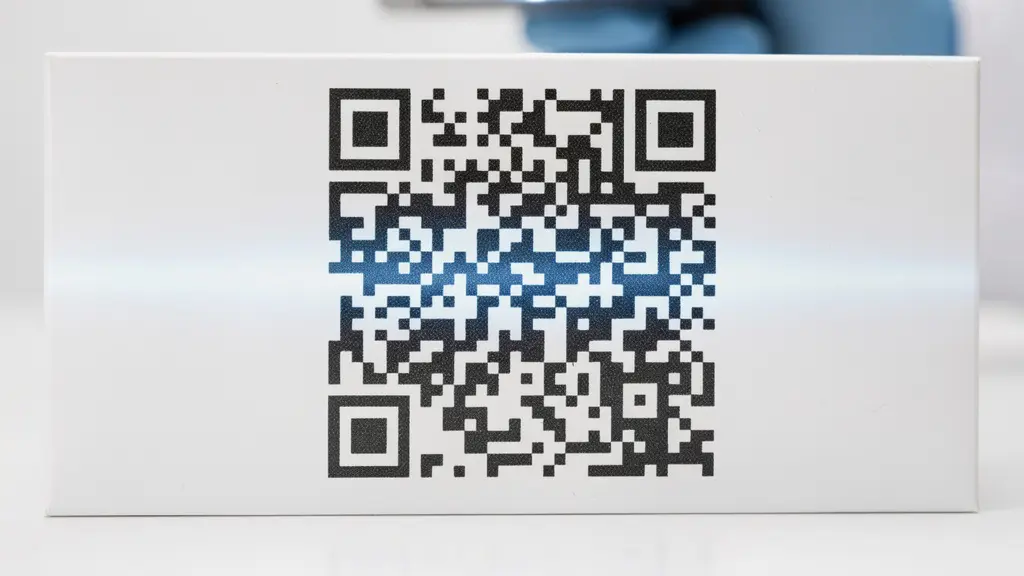
For high-value sectors like pharmaceuticals, the GS1 DataMatrix is the key. This two-dimensional code can hold a vast amount of data beyond just the GTIN, including batch numbers, expiry dates, and a unique serial number. This creates the basis for an Identifier Lifecycle Management strategy, where each specific item can be tracked as a unique entity. Implementing GS1 is therefore the prerequisite for any serious immutable tracking initiative, providing the structured, standardised data that will ultimately be secured on a ledger.
RFID vs NFC: Which Tagging Tech offers Better ROI for High-Value Items?
Once you have a standardised identifier like a GTIN, the next strategic decision is the data carrier technology. For high-value goods, the choice often narrows to Radio-Frequency Identification (RFID) and Near Field Communication (NFC). While both use radio waves to communicate, they serve fundamentally different purposes and offer distinct returns on investment. The decision is not about which technology is “better,” but which is best suited for your specific use case, risk profile, and budget within the UK market. Your choice will define how data is captured and, crucially, who can capture it.
RFID is built for distance and volume. Passive RFID tags can be read from several metres away, and active tags from up to 100 metres. This makes it ideal for warehouse and logistics operations, where hundreds of items on a pallet can be scanned simultaneously without a direct line of sight. This dramatically improves inventory accuracy and operational efficiency. However, this same long-range capability makes it less suitable for consumer-level authentication, as it offers limited direct interaction. NFC, a subset of RFID, operates at a very short range (up to 10 cm), requiring an intentional “tap” from a device. This makes it perfect for consumer-facing authentication. A customer can tap their smartphone on a luxury item or pharmaceutical package to verify its authenticity on the spot, creating a powerful link between the physical product and its digital record.
The following table, based on an analysis of IoT in retail supply chains, breaks down the key differences for UK implementation:
| Feature | RFID | NFC |
|---|---|---|
| Read Range | Up to 100 meters (active) | Up to 10 cm |
| Consumer Interaction | Limited | Tap-to-authenticate with smartphones |
| UK Implementation Cost | Higher initial investment | Lower per-unit cost |
| Best UK Use Case | Warehouse tracking (Tesco distribution) | Luxury retail (Harrods authentication) |
| Insurance Premium Impact | Moderate reduction | Higher reduction for consumer goods |
For a QA Director, the ROI calculation must factor in both operational efficiency and risk mitigation. RFID provides a strong return in logistics optimisation, while NFC delivers a higher ROI in brand protection and consumer trust, potentially commanding higher insurance premium reductions for consumer-facing goods due to its robust point-of-sale verification capability.
The Serial Number Cloning Trick That Bypasses Basic Checks
Perhaps the most insidious threat is not a crude fake, but a sophisticated counterfeit that perfectly mimics a genuine product—right down to its serial number. This is the serial number cloning trick, a form of threat-actor mimicry that bypasses basic authentication checks. A counterfeiter acquires a single valid serial number from a genuine product and applies it to thousands of fakes. When a customer or inspector checks this number against a central database, it registers as valid. The first check passes. It may take dozens or even hundreds of checks from different locations before the system flags the number as being used concurrently, by which time countless fakes have already entered the market.
This tactic is especially prevalent in sectors with high-value, high-volume goods. Globally, the problem is immense; the counterfeit drug market alone costs more than $200 billion per year, and cloning is a key enabler. A simple “one-to-many” database lookup is no longer a sufficient defence. Defeating this requires a system where the digital identity of a product is as unique and impossible to duplicate as the physical product itself. This is where an immutable ledger becomes a necessity, creating a one-to-one link between the physical asset and its unique digital-physical twin.

An immutable ledger, such as a blockchain, doesn’t just check if a serial number is valid; it tracks its entire state. When a product is first scanned, its digital token on the ledger is “activated.” Any subsequent scan checks the state of that token. If the token has already been marked as “sold” or “activated” in another location, the system immediately flags the new scan as fraudulent. This “first-read” principle makes cloning exponentially more difficult, as the first genuine product to be scanned claims the identity, invalidating all clones.
Your Audit Checklist: Implementing a Defence Against Cloning
- Assign unique identifiers secured by a distributed ledger system for each individual product unit, not just by product line.
- Enable authentication (e.g., via QR code or NFC) using smartphone apps or dedicated readers at multiple points throughout the supply chain.
- Issue encrypted, single-use credentials or tokens for each unit to protect the identity of high-value goods from being re-used.
- Deploy cryptographic codes that cannot be easily spoofed or reverse-engineered, using the security of the distributed ledger.
- Track individual parts or components with their own unique codes to enable precise recalls and granular inventory management.
When to Conduct Surprise Supply Chain Audits to Detect Leakage?
Technology and standards provide the framework for security, but operational resilience is forged through verification and enforcement. Surprise supply chain audits are one of the most powerful tools a QA Director has to ensure that agreed-upon procedures are actually being followed. While scheduled audits are useful for process review, unannounced inspections are essential for detecting leakage, diversion, and the infiltration of counterfeits. They test the system under real-world conditions, revealing procedural gaps and compliance failures that would otherwise remain hidden. The goal is not to foster mistrust, but to create a culture of constant readiness and accountability.
The timing and focus of these audits should be data-driven and risk-based. Key triggers for a surprise audit include:
- Anomalous Data Patterns: A spike in “invalid scan” alerts from a specific distribution hub or retail region.
- Market Intelligence: Reports from customers, investigators, or market monitoring services about suspicious products appearing in a certain area.
- High-Value Shipments: Auditing the arrival and processing of particularly valuable or sensitive product shipments.
- New Partner Onboarding: Conducting an early, unannounced audit within the first few months of a new distributor or logistics partner relationship to verify initial compliance.
The legal deterrents for non-compliance within the UK are severe. Under the Trade Marks Act 1994, UK law establishes maximum penalties of up to 10 years in prison or an unlimited fine for trading in counterfeit goods. Communicating these stakes to partners underscores the shared responsibility and legal jeopardy involved. A comprehensive approach, as advised by logistics experts, is crucial.
Companies should contemplate putting in place a comprehensive anti-counterfeiting system that starts with training staff to spot and test for counterfeit products, buy only from trusted sources, monitor the flow of goods, and report the entry of fake goods into the supply chain.
– DHL Logistics, DHL Logistics of Things Report
Surprise audits are the practical enforcement of this system. They transform your security policy from a document into a living, breathing operational discipline that protects your products, your brand, and your customers.
Why Descriptive Brand Names Are Rejected by the UKIPO?
A robust technical defence against counterfeits can be critically undermined by a weak legal one. This is where brand strategy and intellectual property (IP) law intersect with supply chain security. A “descriptive” brand name—one that simply describes the product, its function, or its characteristics (e.g., “Sweet” for sugar or “London Laptops” for computers)—is often rejected for trademark registration by the UK Intellectual Property Office (UKIPO). The legal principle is that such terms must remain free for all competitors to use. From a security perspective, this creates a significant vulnerability: if you cannot exclusively own your brand name, you have a much weaker legal basis to stop counterfeiters from using it.
Counterfeiters thrive on ambiguity. A descriptive name gives them a veneer of legitimacy. They can argue they are simply “describing” their product, making it more difficult and costly for you to win an infringement case. A distinctive, inventive name (like “Kodak” or “Google”) is inherently easier to protect. It has no prior meaning and is uniquely associated with your brand. The UKIPO’s stance is firm: a trademark must be distinctive enough to function as a reliable badge of origin for the consumer. A descriptive mark fails this test, as it doesn’t distinguish your goods from those of another trader.
Your immutable tracking system logs the journey of an asset, but your trademark is what gives that asset its commercial identity. If that identity is legally weak, your ability to act on the intelligence gathered by your tracking system is compromised. You might identify a counterfeiter, but face a protracted and uncertain legal battle. Therefore, selecting a strong, protectable brand name is a foundational element of an anti-counterfeiting strategy. It is the legal armour that complements your technical shield, ensuring that when you find a fake, you have the clear legal authority to take it down.
How to Tag Physical Assets for Immutable Ledger Tracking?
The core principle of an immutable ledger system is the creation of a definitive, one-to-one link between a physical asset and its digital record—the digital-physical twin. The tagging process is where this link is forged. It must be executed with precision and security to ensure the integrity of the entire system. Simply applying a QR code or RFID tag is insufficient; the process must be designed to be tamper-evident and integrated seamlessly into your UK manufacturing and packaging lines.
The process of secure tagging follows a clear protocol:
- Unique Identification: Every single product unit must be assigned a unique, cryptographically generated identifier. This is not a batch number, but a serialised code that will correspond to a unique token on the ledger.
- Secure Embedding: The data carrier (e.g., NFC chip, QR code printed with security inks) should be embedded into the product or its primary packaging in a way that is difficult to remove or tamper with without showing visible damage. Tamper-evident labels or direct integration during the manufacturing process are best practices.
- Controlled Activation: The identifier is “activated” on the immutable ledger at a secure, controlled point—typically at the end of the production line. This is the moment the digital-physical twin is officially “born.”
- Chain of Custody Scans: Staff at every subsequent handover point (warehouse, distributor, retailer) must be trained on correct scanning procedures to update the asset’s status on the ledger. This maintains an unbroken, auditable chain of custody.
This meticulous process has been successfully implemented in various high-value industries. For example, a European tech startup, FIDÉwine, developed a blockchain-based solution to manage the wine supply chain. By tagging individual bottles, they could provide consumers with a verifiable history of the wine’s provenance, from the vineyard to the point of sale, bringing their innovative solution to market in just nine months.
Case Study: FIDÉwine’s Blockchain-Based Wine Provenance
To combat fraud in the fine wine market, tech startup FIDÉwine worked with ScienceSoft to design and develop a blockchain-based supply chain management platform. By assigning a unique digital identity to each bottle, the system allows stakeholders and consumers to track the wine’s journey, verifying its authenticity and provenance. This implementation demonstrates how a secure tagging protocol, combined with an immutable ledger, can bring transparency and trust to a traditionally opaque market.
Ultimately, the tag is the anchor that connects your physical product to the world of digital verification. The integrity of that anchor, and the process of applying it, determines the strength of your entire security chain.
Key Takeaways
- Your greatest security risks are procedural and human, not just technological. Focus on identifying and hardening “data-capture vulnerabilities” throughout your supply chain.
- A layered defence is essential, combining the universal language of GS1 standards, the right tagging technology (RFID for logistics, NFC for consumers), and robust legal protection through a strong, non-descriptive brand.
- True “operational resilience” is achieved through proactive verification. This means implementing continuous training, secure financial protocols, and data-driven surprise audits to ensure compliance and deter fraud.
How to Prevent Invoice Redirection Fraud Targeting UK Finance Teams?
An effective anti-counterfeiting strategy must extend beyond the physical product to encompass the entire ecosystem of transactions that supports it, including financial flows. Threat-actor mimicry is not limited to faking products; it also involves faking communications. Invoice redirection fraud is a sophisticated attack where criminals impersonate a legitimate supplier and trick a company’s finance team into sending payments to a fraudulent bank account. This is a direct threat to UK businesses, bypassing product security to hit the company’s bottom line. The OECD and EUIPO estimated that international trade in counterfeit products amounted to $464 billion, and the criminal networks behind this trade are often the same ones perpetrating financial fraud.
Preventing this requires treating financial instructions with the same level of suspicion and verification as physical goods. An immutable ledger system can play a crucial role here. When a shipment is logged and its journey verified on the ledger, this can trigger a secure, automated payment process. The payment instructions can be linked to the verified digital identity of the supplier on the ledger, making it significantly harder for an external fraudster to intercept or alter them. Any request to change bank details would have to be verified through a multi-factor, out-of-band process, completely separate from email.
The diamond industry provides a powerful parallel for how this works in practice. De Beers, through its Tracr platform, uses blockchain to secure its entire value chain.
Case Study: De Beers’ Tracr Platform for Diamond Authenticity
To guarantee the authenticity and ethical sourcing of its diamonds, De Beers implemented the Tracr blockchain platform. Each diamond is tracked from the mine to the retail store, creating an unchangeable record of its journey and characteristics. This system not only prevents the introduction of conflict or counterfeit diamonds but also secures the provenance data that underpins the value and legitimacy of every transaction associated with that specific gem. It links the physical asset to its financial and ethical identity.
For a UK finance team, this means shifting from a reactive posture to a proactive one. All payment instruction changes must be verbally verified using a pre-established contact number. Integrating financial controls with your supply chain’s track and trace system creates a powerful cross-check, ensuring that you only pay verified partners for verified goods received. This closes a critical loop that criminals are actively exploiting.
Frequently Asked Questions on UK Trademark and Supply Chain Security
Can descriptive marks acquire distinctiveness in the UK?
Yes, it is possible for a descriptive mark to acquire distinctiveness through extensive and consistent use in the UK market. However, the burden of proof is high. The UKIPO will require substantial evidence, such as UK-specific sales figures, detailed marketing expenditure, and independent consumer surveys that demonstrate the public has come to recognise the descriptive term as a badge of origin for your specific company.
How has Brexit affected trademark precedent in the UK?
Since Brexit, the UK’s IP legal framework has begun to diverge from the EU’s. UK courts and the UKIPO are no longer bound by decisions from the EUIPO or the Court of Justice of the European Union. This is creating new, UK-specific nuances in case law, particularly around what is considered ‘descriptive’ or ‘distinctive’. What might be registrable in the EU may not be in the UK, and vice-versa, making UK-specific legal advice more critical than ever.
For Quality Assurance Directors, the next logical step is to audit your existing processes against this framework, identifying the specific human and procedural gaps that place your products, your brand, and your customers at risk.